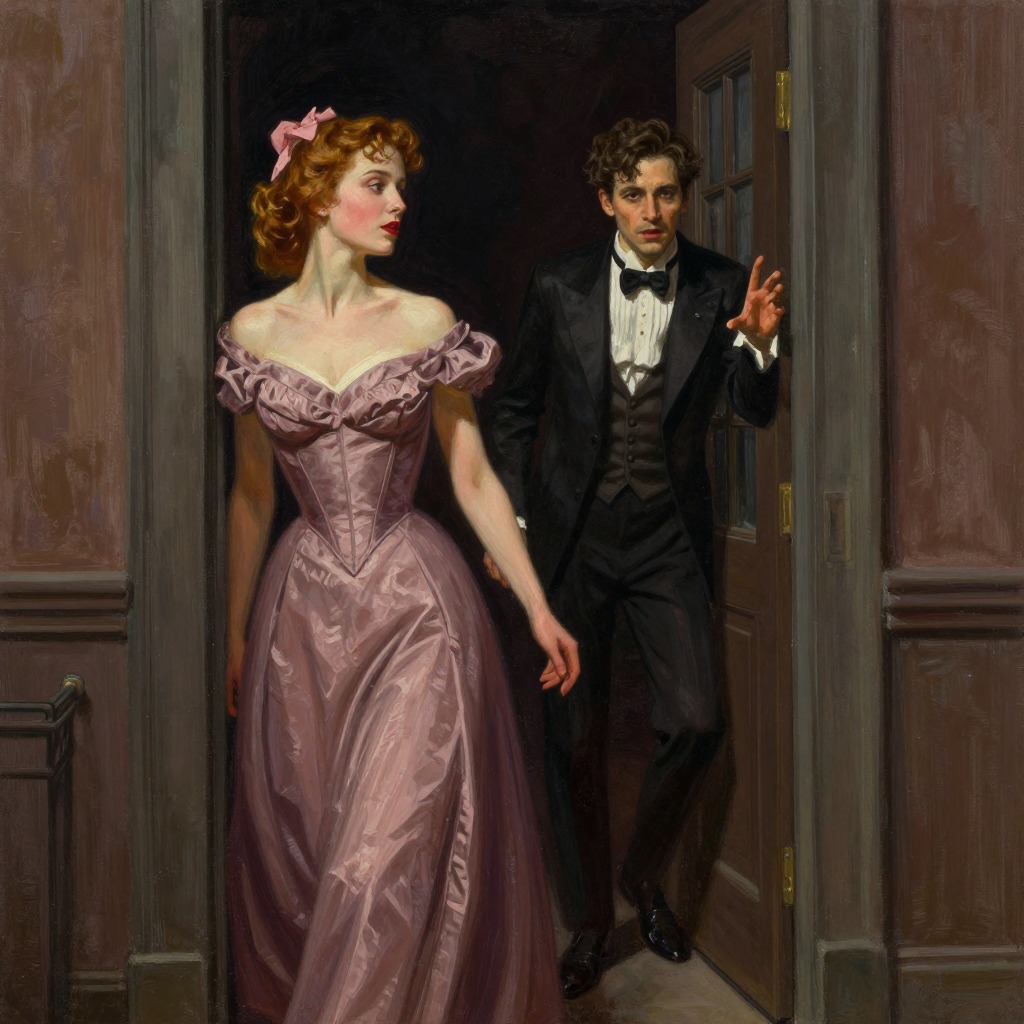
Stella Kowalski
Stella Kowalski, a gentle young woman of about twenty-five, is the sister of Blanche DuBois and the wife of Stanley Kowalski. She lives with Stanley in a two-room flat on Elysian Fields in the French Quarter of New Orleans, a poor but raffish neighborhood far removed from the plantation world of Belle Reve where she and Blanche grew up. Stella's background is obviously quite different from her husband's, yet she has chosen him and his world with a passionate commitment that Blanche can neither understand nor accept. Her decision, at the play's end, to remain with Stanley after he has raped her sister and had Blanche committed to a state institution, makes her the figure through whom the play's most painful questions about love, survival, and complicity are asked.
Identity and Background
Stella is introduced as a "gentle young woman, about twenty-five, and of a background obviously quite different from her husband's." She grew up at Belle Reve, the DuBois family plantation in Mississippi, a world of white columns and aristocratic pretensions. She left that world when their father died and she came to New Orleans, where she met and married Stanley, a Master Sergeant in the Engineers' Corps. Stella describes her attraction to him in terms of physical and emotional intensity: "When he's away for a week I nearly go wild!" and "when he comes back I cry on his lap like a baby." She is pregnant with Stanley's child by the time Blanche arrives, though she waits to announce the news until Blanche is in a quieter condition.
Life and Plot Trajectory
Stella's trajectory in the play is one of progressive isolation from her sister and deepening entanglement with her husband. She welcomes Blanche warmly but is immediately caught between Blanche's horror at her living conditions and Stanley's suspicion of Blanche's motives. After Stanley strikes her during the poker night, Stella flees upstairs to Eunice's apartment but returns to him when he bellows her name from the street below, coming down the rickety stairs with "her eyes glistening with tears and her hair loose about her throat and shoulders" and meeting him with "low, animal moans." The next morning, when Blanche calls Stanley a madman and urges Stella to leave him, Stella replies with quiet finality: "I'm not in anything I want to get out of." She later explains to Blanche that "there are things that happen between a man and a woman in the dark—that sort of make everything else seem—unimportant." Stella listens to Blanche's devastating description of Stanley as an ape-like survivor of the stone age, but when Stanley returns she embraces him "fiercely, and full in the view of Blanche." As the play progresses, Stella learns from Stanley the truth about Blanche's past—the Flamingo Hotel, the seventeen-year-old boy, the expulsion from Laurel—and though she initially protests, she ultimately accepts Stanley's plan to send Blanche away on a bus ticket he has already purchased. When Blanche is taken away by the Doctor and Matron, Stella cries out, "What have I done to my sister? Oh, God, what have I done to my sister?" but allows Eunice to comfort her with the words, "You done the right thing, the only thing you could do. She couldn't stay here; there wasn't no other place for her to go." In the final moments, Stella accepts her baby from Eunice and sobs with "inhuman abandon" as Stanley kneels beside her, his fingers finding the opening of her blouse, murmuring, "Now, honey. Now, love. Now, now, love."
Relationships and Conflict
Stella's relationship with Blanche is defined by a history of unequal roles: Blanche, the older sister who stayed at Belle Reve and fought for it, and Stella, who left and made her own life. Blanche accuses Stella of abandoning the family and then of marrying a "Polack" who is "common" and "bestial." Stella, for her part, has learned to be quiet around Blanche and resists Blanche's attempts to rescue her from a situation she does not wish to leave. Her relationship with Stanley is one of intense physical and emotional dependency. She admits that on their wedding night he smashed all the light bulbs with the heel of her slipper and that she was "sort of—thrilled by it." She tolerates his poker parties, his drinking, his violence, and his cruelty to Blanche because, as she tells Blanche, "I love him." When Stanley reveals that he has told Mitch about Blanche's past, Stella is horrified but does not leave him. Her final act—allowing Blanche to be taken away and then returning to Stanley's embrace—is the culmination of her choice to value her marriage and her unborn child over her sister.
Change and Ending
Stella changes less than she is revealed. From the beginning, she is a woman who has made her peace with a life that Blanche finds intolerable. Her serenity in the morning after the poker night—lying in bed with "that almost narcotized tranquility that is in the faces of Eastern idols"—contrasts sharply with Blanche's hysterical agitation. By the end, Stella has lost her sister but gained a child and a husband who is, if anything, more securely in possession of her. She cries out in guilt and grief, but she does not intervene to stop Blanche's removal, and she accepts Stanley's consolation. The play's final image—Stella sobbing in Stanley's arms while the poker game resumes—is not a happy ending but a tragic one, in which Stella's survival is purchased at the cost of her sister's freedom and her own moral clarity.
Thematic Significance
Stella embodies the play's central tension between the old world of Belle Reve—with its poetry, its illusions, its dependence on "the kindness of strangers"—and the new world of Stanley Kowalski—with its raw physicality, its brutal honesty, and its insistence on the primacy of desire. Stella has chosen the new world, but the play does not allow that choice to be simple or triumphant. Her final sobs, her guilt, and her surrender to Stanley's touch all suggest that the cost of that choice is ongoing and incalculable. She is not a villain but a survivor, and her survival is the play's most troubling testament to the power of the forces that destroy Blanche.